A simple step-by-step guide to field dressing your deer.
Whether you call it field dressing, gutting,
skinning or
cleaning a deer, this simple guide should be helpful.
GENERAL INFORMATION
Well-cared for deer and antelope make fine
table fare for many people. It is important to properly handle
deer and antelope immediately after the shot. How quickly the
animal is field dressed and the meat property cooled determines
the quality of the meat. However, far too many deer and antelope
are wasted or make poor quality eating because hunters do not
follow the simple, field dressing rules of good meat handling
after the kill. These directions will help put good meat on your
table.
CHECK EQUIPMENT
Before the hunt, check to see that you
have all the equipment needed for hunting and field dressing
your deer after the kill. Important items include a sharp knife
for field dressing, a light rope or nylon cord for dragging, a
signed hide tag with attaching cord, a cloth to clean your
hands, a plastic bag for the liver and heart, and a gallon jug
of water for clean-up after words.
AFTER THE KILL
Approach a downed deer with caution, and
be sure it is dead. Assuming a well-placed shot with
modern ammunition, enough blood vessels will often be severed to
bleed the deer or antelope without additional sticking in the
neck. Many careful hunters do bleed their deer by sticking just
above the breastbone.
LEGAL REQUIREMENTS
-
The signed and properly punched tag
must be torn from the permit and attached to the carcass as
soon as the animal has been killed.
-
The deer head must remain unskinned
and attached to the carcass until it has been checked
through an official check station and a seal affixed to the
carcass.
-
The carcass may be skinned except for
the head prior to checking.
FIELD DRESSING
 Field dress your deer or antelope
immediately.
Field dress your deer or antelope
immediately.
Admittedly, the field dressing chore is
not the most enjoyable part of the hunt, but the extra time
spent taking care of the meat will pay dividends at the table.
Field dressing takes effort, so your heavy hunting coat should
be removed and your sleeves rolled up so they wont be soiled.
Disposable vinyl or latex gloves lessen the chances of passing
infectious diseases and make hand cleaning easier.
Blood and digestive juices from organs
possibly penetrated by the shot must be removed from the body
cavity quickly, and the sooner the organs, which deteriorate
rapidly, are removed, the faster the meat will cool. Field
dressing also eliminates dragging unnecessary weight when moving
the animal.
Before starting the field-dressing
process, keep in mind that it is important to keep dirt and
foreign objects away from the exposed body cavity. Removing the
scent glands is not considered necessary, but is done with care
by many hunters. Some archery hunters save the glands for use as
scent while hunting. Removing the glands carelessly can taint
the meat.
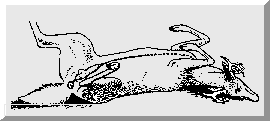
Roll the deer carcass over on its back
with the rump lower than the shoulders and spread the hind legs.
Make a cut along the centerline of belly from breastbone to base
of tail. First cut through the hide, then through belly muscle.
Avoid cutting into the paunch and intestines by holding them
away from the knife with the free hand while guiding the knife
with the other.
Unless the deer head will be mounted,
(SEE DEER CARE FOR TAXIDERMY)
the cut should pass through the sternum and extend up the neck
to the chin to allow removal of as much of the windpipe as
possible. The windpipe sours rapidly and is a leading cause of
tainted meat.
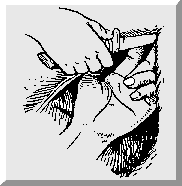
With a small sharp knife, cut
around the anus and draw it into the body cavity, so it comes
free with the complete intestines. In doing this, avoid cutting
or breaking the bladder. Loosen and roll out the stomach and
intestines. Save liver. Split the pelvic or "aitch" bone to
hasten cooling.
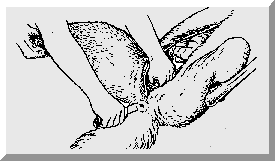 Cut around
the edge of the diaphragm which separates the chest and stomach
cavities, and split the breastbone. Then, reach forward to cut
the windpipe and gullet ahead of the lungs. This should allow
you to pull the lungs and heart from the chest cavity. Save
heart. Drain excess blood from the body cavity by turning the
body belly down or hanging animal head down. Prop the body
cavity open with a stick to allow better air circulation and
faster cooling.
Cut around
the edge of the diaphragm which separates the chest and stomach
cavities, and split the breastbone. Then, reach forward to cut
the windpipe and gullet ahead of the lungs. This should allow
you to pull the lungs and heart from the chest cavity. Save
heart. Drain excess blood from the body cavity by turning the
body belly down or hanging animal head down. Prop the body
cavity open with a stick to allow better air circulation and
faster cooling.
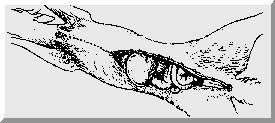 A
clean cloth may be useful to clean your hands. If you puncture
the entrails with a bullet or your knife, wipe the body cavity
as clean as possible or flush with water and dry with a cloth.
Don't use water to wash out the body cavity unless the paunch or
intestines are badly shot up.
A
clean cloth may be useful to clean your hands. If you puncture
the entrails with a bullet or your knife, wipe the body cavity
as clean as possible or flush with water and dry with a cloth.
Don't use water to wash out the body cavity unless the paunch or
intestines are badly shot up.
Part of the satisfaction of the
hunt comes with making a clean kill and in doing a neat job of
field dressing your deer. Veteran hunters may have variations in
the steps of field dressing. The important points are to remove
the internal organs immediately after the kill without
contaminating the body cavity with dirt, hair, or contents of
the digestive tract and to drain all excess blood from the body
cavity.
All parts damaged by gunshot
should be trimmed away. If the weather is warm of if the deer is
to be left in the field for a day or more, it may be skinned,
except for the head, and washed clean of dirt and hair. It
should be placed in a shroud sack or wrapped with porous cloth
to cool (cheesecloth is ideal). The cloth covering should be
porous enough to allow air circulation but firmly woven enough
to give good protection from insects and dirt. Lacking porous
cloth, hunters often coat the inside of the body cavity with
black pepper to repel insects. Adequate cooling may take six
hours or more, depending on weather conditions.
AGING THE MEAT
Age the deer carcass in a cool,
dry place. Aging of well cared for carcasses at correct
temperatures yields better flavored, more tender meat. Best
results are obtained in a near-constant temperature, preferably
from 34 to 36 degrees Fahrenheit. Aging for one to two weeks is
about right for the best quality venison, depending on the age
and condition of the animal.
CUTTING THE CARCASS
If the deer carcass is to be
placed in freezer or locker plant storage, it may be more
convenient to use the services of an experienced butcher for the
cutting and wrapping. If the intent is to gain experience by
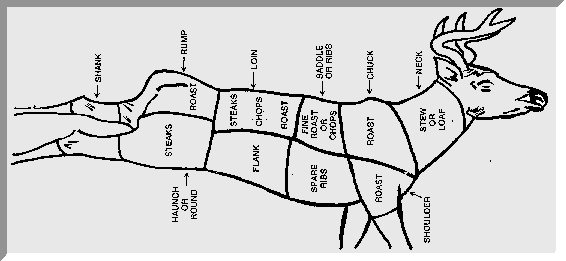
doing the job yourself, cut according to the diagram shown at
the bottom of the page.
The first step is to saw the
carcass down the center of the backbone, dividing it into two
sides. If the neck is to be used for a pot roast, it should be
removed before the carcass is split. Place the sides of venison
inside down on a table and cut according to the chart. Trim
excess bone and gristle and further cut meat into family-size
packages.